
Mental Health – Stress in the Summer Months: Why Slowing Down After Stress is Essential
Mental Health – Stress in the Summer Months: Why Slowing Down After Stress is Essential
Should You Get a Massage in the summer months? If you’re feeling:
- unusually tired
- mentally foggy
- irritable
- tense or achy
- overwhelmed
…then yes, massage is a highly effective way to reset your nervous system and counter summer‑specific stress triggers.
That lingering tension shows up in different ways—fatigue, difficulty focusing, shorter patience, or simply feeling drained without knowing why. This is where mental health becomes more than a conversation. It becomes something that needs real attention.
Slowing down after stress is not a luxury. It’s a necessary step in protecting how people think, feel, and work.
Why Stress Doesn’t End When Work Ends
During high-pressure periods, the body stays in a constant state of alert. Stress hormones rise, and the mind focuses on keeping up with demand.
Research from the American Psychological Association shows that ongoing stress can affect memory, focus, and decision-making. When stress continues without a break, it becomes harder to think clearly and stay engaged.
A study published in Frontiers in Psychology (2020) found that sustained mental strain without recovery leads to cognitive fatigue, which reduces attention and increases mistakes.
Even after deadlines pass, the body does not immediately return to normal. Without a reset, that pressure carries forward into the next phase of work.

The Mental Health Impact at Work
Mental health directly affects how work gets done. When someone feels mentally drained, tasks take longer. Communication becomes less clear. Small problems feel bigger than they are.
According to Gallup, employees experiencing burnout are significantly less engaged and more likely to leave their roles. This creates challenges not just for individuals, but for entire teams.
Another report from the Centers for Disease Control and Prevention estimates that stress-related absenteeism costs U.S. businesses over $225 billion each year.
These are not isolated issues. They are patterns that affect consistency, morale, and long-term business health.
This is why slowing down matters.
Why Slowing Down Supports the Brain
The brain is not built to stay in high-alert mode all the time. It needs moments to reset.
When people slow down—even briefly—the body begins to shift out of stress mode. Breathing deepens, muscles relax, and the mind starts to settle.
Research published in the International Journal of Neuroscience shows that massage therapy can lower cortisol levels while increasing serotonin and dopamine. These changes support mood, focus, and emotional balance.
A more recent study in Complementary Therapies in Clinical Practice (2021) also found that massage helps reduce anxiety and improves overall mental well-being.
This is not just about feeling better. It changes how people think and respond throughout the day.
Where Chair Massage Makes a Difference
After intense work periods like tax season, most employees don’t take the time to reset. They move straight into the next set of responsibilities.
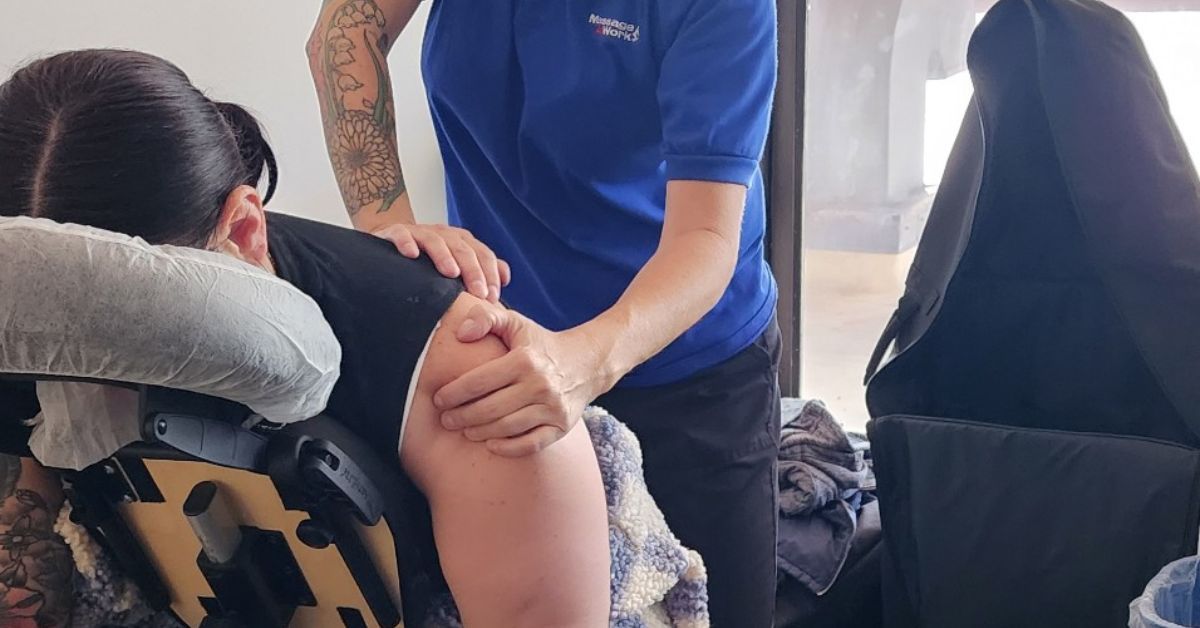
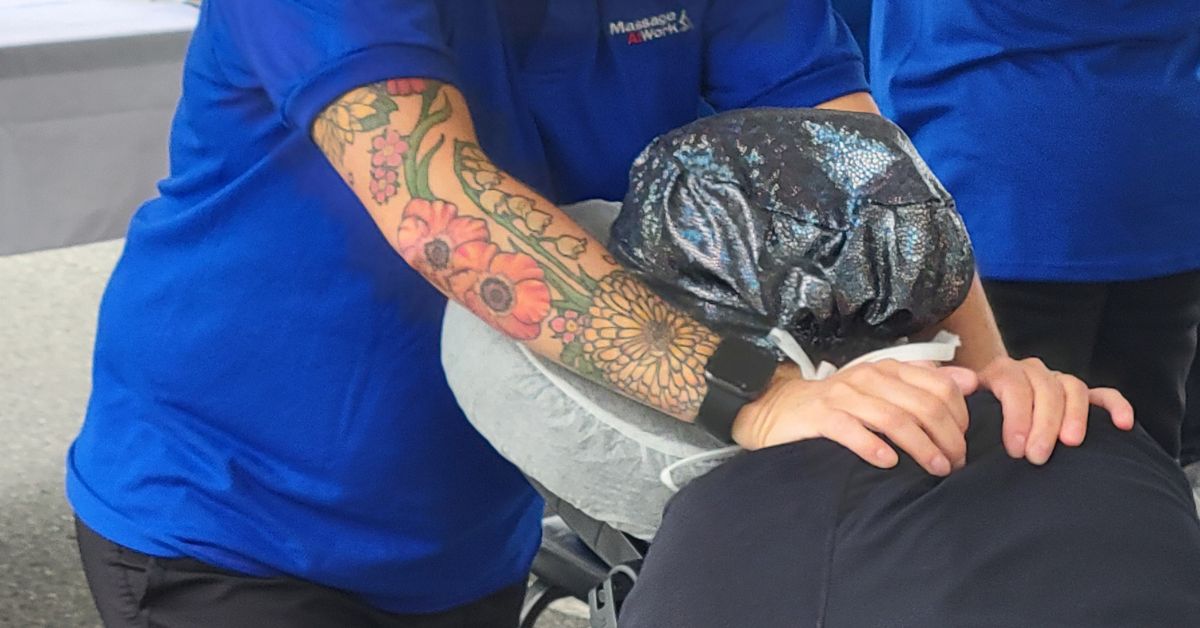
Chair massage creates a simple way to pause.
Even a short session gives the body a chance to release built-up tension. At the same time, it allows the mind to slow down and regain focus.
Employees often return to their work feeling lighter, calmer, and more present. That shift may seem small, but it has a noticeable impact on how they handle the rest of the day.
Slowing down is not lost time — it protects how people think and work.
Why This Matters for Businesses
Companies depend on clear thinking, steady energy, and strong communication. When employees are mentally exhausted, those areas begin to weaken.
Supporting recovery after high-stress periods helps teams stay consistent. It reduces errors, improves focus, and creates a more stable work environment.
Just as important, it shows employees that their well-being matters.
When people feel supported, they are more likely to stay engaged, contribute, and remain loyal to their organization.
Getting a massage after stressful times such as tax season is essential not only for individual well-being, but for the overall liveliness of a business.
Creating Space to Reset
Massage At Work provides onsite chair massage programs that make it easy for employees to slow down during the workday. These sessions fit naturally into busy schedules and require minimal disruption.
After periods of intense demand, this kind of reset can make a meaningful difference.
It gives employees a chance to step out of stress mode and return with a clearer mind.
Sometimes, the best way to move forward is to pause first.
American Psychological Association
Stress effects on memory and cognition
2. Frontiers in Psychology (2020)
Cognitive fatigue and sustained stress research
3. Gallup
Employee burnout and engagement data
4. Centers for Disease Control and Prevention
Workplace absenteeism and productivity loss
5. Rapaport , M. H., et al. (2021)
Massage therapy and anxiety reduction
Complementary Therapies in Clinical Practice
 A Certified LGBT Business Enterprise ®
© 2026 Massage At Work USA, LLC. The Corporate On-Site Massage Professionals™. All Rights Reserved.